“Literary Frontiers”: The Wittliff features Larry McMurtry, Cormac McCarthy, Paulette Jiles, and many other masters of classic historical fiction in new exhibition

SAN MARCOS — The Wittliff Collections puts the spotlight on authors who have brought to life the epic sweep of Texas history in its new exhibition, “Literary Frontiers: Historical Fiction & the Creative Imagination.”
For generations Texas writers have illuminated the human stories at the heart of legends and myths, from the trail driving cowboys in Larry McMurtry’s Lonesome Dove to the Indian wars in Cormac McCarthy’s Blood Meridian and Paulette Jiles’s News of the World. The genre also includes the iconic Texas battles for independence in novels by Stephen Harrigan and Elizabeth Crook and stories of the 1900 Galveston hurricane by Ann Weisgarber and Joe R. Lansdale.
“The best historical fiction puts readers inside the minds of people making history,” says Wittliff Collections Southwestern Literature Curator Steve Davis. “These writers have breathed imaginative life into people of the past and made their times come alive for us.”
Literary Frontiers presents hand-written manuscripts, vintage maps, rare photographs, and artifacts such as the hunting watch owned by Paulette Jiles’s grandfather, which inspired the watch carried by her character Captain Jefferson Kidd in News of the World. The exhibition also includes artwork such as the original oil painting used as the cover art for the first edition of Lonesome Dove.
“You can trace the arc of the creative process in this exhibition,” Davis says. “You can see the authors’ original inspiration — and many of these novels were inspired by real-life people. You can also examine the authors’ research, their manuscript drafts showing their struggles to find the right vision, and then the hard work and perseverance that created these classic books.”
Davis points to David Marion Wilkinson’s Not Between Brothers as one of the best examples of a Texas epic on display. Wilkinson’s book vividly interweaves the lives of Anglos, Mexicanos, and American Indians in Texas from 1821 until the eve of the Civil War. “You get such a rich sense of the daily life, not to mention the grand adventures these people had — along with the terrible hardships they suffered and the heartbreaks they endured.”
Historical novels are best-known for focusing on clashes of empire and other pivotal events, but Davis says that the genre is incredibly diverse. “One way to present historical fiction is through the lens of family history, as you see in Sandra Cisneros’s Caramelo, which traces several generations of a family with stories dating back to the Mexican Revolution. Then you have a writer like Stephen Harrigan, whose topics cover everything from the fall of the Alamo to the young Abraham Lincoln to an artist working in early 20th century Texas.”
Women’s stories are at the center of many of the works featured in Literary Frontiers. “Women have largely been written out of official histories,” Davis says, “and novelists have been finding and rescuing their stories for generations.” He cites Jovita González’s Caballero: A Historical Novel, written in the 1930s but not published until 1996. “Caballero is set during the U.S.-Mexico War and it is an eye-opening look at the lives of women in the ranchero culture of the time. It’s now considered a classic work of Texas literature.”
More recent novels focusing on strong-willed, independent-minded women include Ann Weisgarber’s The Personal History of Rachel Dupree, which tells of an African American homesteader in the Badlands of South Dakota in the early 1900s. Others are two novels that won Spur awards from the Western Writers Association: Judy Alter’s Mattie, based on a real-life woman doctor in frontier Nebraska, and Elizabeth Crook’s The Night Journal, which focuses on a young woman working as a Harvey Girl in New Mexico in the 1890s.
Racial injustice is another theme that can be found in historical fiction, such as in Joe R. Lansdale’s Edgar-winning novel The Bottoms, which uncovers the murder of an African American woman in East Texas during the Great Depression.
“The theme of racial injustice in Texas also reminds us that these stories aren’t always told through novels,” Davis says. “One of the new archives we have at the Wittliff is from playwright Celeste Bedford Walker. Her play Camp Logan is also featured in this exhibition.” Camp Logan is the moving account of career African American soldiers stationed in Houston during World War I who were subjected to brutal racism, and then were court-martialed and executed following a riot in the city. “The Washington Post described Camp Logan as ‘a textbook example of how to simultaneously entertain and educate an audience,’” Davis says. “I think that praise really underscores what so many of the writers featured in this exhibition have accomplished.”
“Literary Frontiers” also gives visitors a chance to explore excellent books that deserve more attention, Davis says. “We have Robert Flynn’s North to Yesterday, a satirical trail drive novel published in 1967 that substantially influenced Larry McMurtry’s later Lonesome Dove. We’re also showing Jan Reid’s Comanche Sundown, which won the Texas Institute of Letters Award for Best Novel in 2011 and gets us as close to the spirit of famed Comanche chief Quanah Parker as any book has ever done.”
Authors featured in “Literary Frontiers” include Judy Alter, Celeste Bedford Walker, Sarah Bird, Mark Busby, Sandra Cisneros, Elizabeth Crook, Robert Flynn, Jovita González, Stephen Harrigan, Elmer Kelton, Elithe Hamilton Kirkland, Paulette Jiles, Joe R. Lansdale, Cormac McCarthy, Larry McMurtry, Jan Reid, Edwin “Bud” Shrake, Ann Weisgarber, David Marion Wilkinson, Bill Wittliff, and more. The exhibition was curated by Steve Davis.
The exhibition will be accompanied by two major events. On Sunday, Sept. 23, novelists Elizabeth Crook, Stephen Harrigan, and Ann Weisgarber will join Davis for a conversation at the Wittliff. In November the Wittliff will present a program with Celeste Bedford Walker to highlight Camp Logan. Check the Wittliff’s website for further details: www.thewittliffcollections.txstate.edu/collections.html
“Literary Frontiers: Historical Fiction & the Creative Imagination” will be on view from August 1 through Dec. 14, 2018.
(Information from organization’s press release and website)

IN MEMORIAM | TEXAS LITERARY LIGHTS
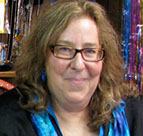 Debra Winegarten 1958–2018
Read Lone Star Literary Life’s 2017 interview with author Debra Winegarten here:
6.4.2017 Words of wisdom from Austinite Debra L. Winegarten
Debra Lou Winegarten was born in Dallas on December 29, 1957 to Ruthe and Alvin Winegarten, and passed from this life on September 10, 2018, the first day of Rosh Hashanah 5779. Debra was an author, publisher, educator, flutist, and all-around rabble-rousing feminist who delighted in inspiring and challenging others.
Winegarten received her undergraduate education at Texas Woman’s University, where she discovered her passion for sociology. She appreciated the skill and confidence that came from her experiences at TWU, and she served as president of the Austin TWU Alumni chapter for several years. Winegarten received her master’s in sociology from The Ohio State University, and taught sociology at the college level, most recently at South University and The Art Institute, both in Austin. She also founded Sociosights Press, whose mission is to publish books that “transform society one story at a time,” in accordance with the principles of tikkun olam.
Winegarten reveled in being a Jew in Texas; she found comfort and inspiration in the practice of Judaism, and was a member of Congregation Agudas Achim in Austin. A third-generation Dallasite, Winegarten pursued a strong interest in Jewish history that her to become involved in the Texas Jewish Historical Society, where she took on leadership positions, including a term as president. She made a point of visiting Jewish historical sites wherever she traveled, from Cairo, Egypt to Dublin, Ireland and Waco, Texas.
Winegarten authored a number of books, specializing in biography and poetry, and her work garnered many awards. Her titles include There’s Jews in Texas?, Where Jewish Grandmothers Come From, Oveta Culp Hobby: Colonel, Cabinet Member, Philanthropist, Katherine Stinson: The Flying Schoolgirl, and, with Zvi Yaniv, My Life on the Mysterious Island of Nanotechnology. In June 2018, she was awarded Sarah Patton Stipend for non-fiction at The Writer’s Hotel for her memoir-in-progress.
Winegarten was especially proud of the books she published via Sociosights Press. Among its titles are the award-winning children’s book Almost a Minyan, written by Lori S. Kline and illustrated by Susan Simon, and Faces of the Matriarchs: An Artistic Depiction of Women in Genesis by Melanie Lewis, which was released while Debra was in hospice.
Winegarten leaves behind many who have been delighted and inspired by her. She was fond of saying it took three blackboards to draw out her family tree, and her extended family is large. She was predeceased by her mother, Ruthe Winegarten, father Alvin Winegarten, sister Martha Wilson, and stepmother Phyllis Putter, and is survived by her devoted wife, Cindy Huyser, her brother, Marc Sanders, uncle Larry Lewin, and her siblings Susan Picard, Josh Putter, Alan Putter, and David Putter as well as by her cats Orange Julious, Keyboard, and Sheina. At the time of her death, she was employed by the University of Texas, where she identified herself as the “first undersecretary of the American Astronomical Society.”
Donations in Winegarten’s honor may be made to the Ruthe Winegarten Memorial Foundation for Texas Women’s History (www.womenintexashistory.org/support/), or to a charity that provides service to pets or to the homeless.
Graveside services were held Thursday, September 13 in the Agudas Achim Section of Austin Memorial Park Cemetery. Online guestbook and obituary are available at AustinNaturalFunerals.com. May her memory be for a blessing.
(Obituary edited from AustinNaturalFunerals.com)
 Same Page Book Festival issues call for authors
DECATUR — The Decatur (Texas) Public Library has issued a call for authors to take part in the Same Page Book Festival. The event will take place on Saturday, September 29, 2018 from 1 to 5:30 p.m. at the library, located at 1700 Highway 51 South in Decatur. Events will include an author fair for book sales and signings and author panels for readers and writers. The closing keynote speakers will be Carol and Doug Hutchison, authors of Behind the Texas Badge.
Authors who would like to participate should contact Decatur Public Library Director Patricia Peters at (940) 393-0290. For more information, visit www.decaturpubliclibrary.com
(Information from organization’s press release and website)
Nominations open for Texas State Artists
AUSTIN — “There is a government code that says that the legislature will name a Texas poet laureate, a state musician, and then state visual artists—one in two-dimensional art and one in three-dimensional art,” says Anina Moore with the Texas Commission on the Arts.
Moore says artists don’t receive money for this honor but there are other benefits. “We do see some recipients able to market themselves more widely or become invited to festivals and other events based on the fact that they’ve been named as state poet laureate or visual artist, things like that.”
(Editorial aside: While being named a “Texas State Artist” is certainly an honor, plumbers are paid for their work; accountants are paid for their work; crop dusters are paid for their work. Artists of all sorts are expected to work for free, for exposure, for “things like that.”)
Nominees must:
- be native Texans or five-year residents of the state
- have received recognition for a high level of excellence and success in their discipline
- have received critical reviews in state, regional or national publications.
The Texas State Artists nomination process is open through October 15, 2018. Texans can nominate multiple artists for Texas State Artist, and artists can nominate themselves. Moore says that during the last nomination period, the commission received 300 unique nominations.
For more information and a nomination form, visit https://txoriginal.com/
(Information compiled from media reports)
4th Annual Permian Basin Writers’ Workshop set for Oct. 13-14
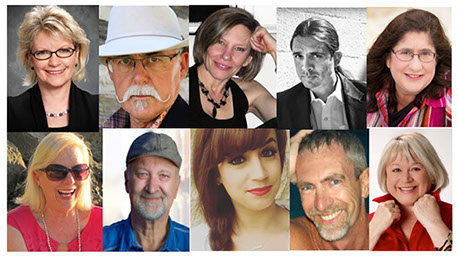
Now in its fourth year, the Permian Basin Writers’ Workshop annual event will feature writing coaches, agents, and publishers from around the country, October 13-14, 2018.
The two-day workshop event will be held in Midland, at the Marie Hall Academic Building at Midland College.
The workshop will feature ten speakers, including Margie Lawson, Christie Craig, Manning Wolfe, David Farland, Reavis Z. Wortham, Kristen Marten, Stephen Graham Jones, Donna M. Johnson, B. Alan Bourgeois and Arlene Gale.
Twenty-one workshop topics will be covered, including deep editing techniques, character building, writing a thriller, how to launch your writing career quickly and marketing, renegade style.
The Permian Basin Writers’ Workshop is a 501(c)(3) nonprofit organization and is organized by the Permian Basin Bookies in collaboration Midland College.
For more information, visit www.permianbasinwritersworkshop.org
(Information from organization’s press release)
Leave a Reply